Collaborative creativity is when a group of designers/artists get together to find a game plan. The best way to find a well-rounded and effective final product is to have a group work on it. Mary Stewart talks about some of the steps collaborative groups should take part in to ensure that the process is effective. The summarized version is as follows:
Sharpen your focus.
Use playful rules (make the process seem fun when you're being effective).
Number your ideas.
Build and jump (pose questions and goals that help the group continue to move forward).
Leave space for a visual representation of your ideas.
Warm up, get to know your group if people are new.
Keep physical resources out so you can make things on the spot.
What I noticed about this list is that collaborative creativity sounds like a video game. Seriously. When you begin a new game, you sharpen your focus by educating yourself on the game until you know everything about it and exactly what you'll be doing to reach your goal. Playful rules are like the activities that are within some games, like various fights you participate in to develop more experience, or different points along a storyline. If its a storyline game, or anything that has some sort of order, or you collect various skill points or objects along the way, sequences and numbering is involved. Building and jumping is obviously something found in games - whether you actually reach new levels, or just advance through varying tasks, you're being prompted to increase in experience and move toward the goal. There is constant visual representation of ideas through life, energy, amo, inventory, etc. bars or visual representations on your screen. When you begin a single-player game with a storyline, like Halo, you are introduced to your "group" or teammates, and in a live game online, you quickly learn the important details about the other people playing so you can use them to your advantage. And finally, physical resources are always available for leisure or neccesity - building blocks and tools in Minecraft, food, valuable materials, etc. in Skyrim, amunition, weaponry, etc. in a million others.
So yes, creative collaboration is very much like gaming. Does that proove that games are art now?
Monday, December 15, 2014

Design: A Practical Take
In Launching the Imagination, Mary Stewart spells out the difference between art and design for all of us who like to go back and forth and back and forth and back and forth on what the difference is.
Design solves a problem, and art makes one.
To me, this idea is rather hard to grasp, or at least it is hard to understand why it even matters. However, I just had a stroke of genius enlightenment, and will bestow upon you a wonderfully practical take on the argument. First of all, Stewart defines the questions designers ask at the begining of a new design task, which are essentially the proof that designers are solving an established problem:
What do we need?
What existing designs are similar to the design we need?
What is the difference between the existing designs and the new designs?
How can we transform, combine, or expand these exisiting designs?
So, here's the practical example: headphones. I've been doing a serious amount of review-reading on headphones because I finally decided I needed to get a pair after a year of saying I would and not actually deciding which one I thought was the best. Headphone reviews are quite enlightening, because they talk about the difference between all different types of headphones on a highly technical level, and in comparison to others. This is the same process that happens in design, at least for me and the people I know. When designing something, my analysis of the design is highly technical, determing if any little piece of the product has a flaw or looks out of place or strange. And throughout the process, I am constantly looking at similar design styles, products, and the rest of the line I'm creating, to determine if the design is going in the right direction.
With headphone design, what do we need is a question that I would think is asked last, so I'll skip that and come back. So say the problem is, your company is competing with Beats, so you need to make something that is better than their headphones. What existing designs are similar to the anti-beats design we need? Find other companies who are in high regard and rate well in comparison to beats. What is the difference between the existing designs and the new designs? That is, what is the difference between those headphones we just looked into and our ideas for our headphone design? Once those are defined... how can we transform, combine, or expand these exisiting designs? In other words, how can we bridge the gap between our headphone design and those successful anti-beats headphones to come out on top? Then finally, what do we need to accomplish this?
There you have it, the problem-solving designer in a practical life-application. :) Here are my headphones with a review attached, just for fun.

Design solves a problem, and art makes one.
To me, this idea is rather hard to grasp, or at least it is hard to understand why it even matters. However, I just had a stroke of genius enlightenment, and will bestow upon you a wonderfully practical take on the argument. First of all, Stewart defines the questions designers ask at the begining of a new design task, which are essentially the proof that designers are solving an established problem:
What do we need?
What existing designs are similar to the design we need?
What is the difference between the existing designs and the new designs?
How can we transform, combine, or expand these exisiting designs?
So, here's the practical example: headphones. I've been doing a serious amount of review-reading on headphones because I finally decided I needed to get a pair after a year of saying I would and not actually deciding which one I thought was the best. Headphone reviews are quite enlightening, because they talk about the difference between all different types of headphones on a highly technical level, and in comparison to others. This is the same process that happens in design, at least for me and the people I know. When designing something, my analysis of the design is highly technical, determing if any little piece of the product has a flaw or looks out of place or strange. And throughout the process, I am constantly looking at similar design styles, products, and the rest of the line I'm creating, to determine if the design is going in the right direction.
With headphone design, what do we need is a question that I would think is asked last, so I'll skip that and come back. So say the problem is, your company is competing with Beats, so you need to make something that is better than their headphones. What existing designs are similar to the anti-beats design we need? Find other companies who are in high regard and rate well in comparison to beats. What is the difference between the existing designs and the new designs? That is, what is the difference between those headphones we just looked into and our ideas for our headphone design? Once those are defined... how can we transform, combine, or expand these exisiting designs? In other words, how can we bridge the gap between our headphone design and those successful anti-beats headphones to come out on top? Then finally, what do we need to accomplish this?
There you have it, the problem-solving designer in a practical life-application. :) Here are my headphones with a review attached, just for fun.
Thursday, December 11, 2014
Fragmentation
"As an object moves, it sequentially occupies various positions in space. Visual fragmentation can be used to simulate this effect in art." - Mary Stewart in Launching the Imagination
Fragmentation is the ability to communicate movement through a sort of all-at-once stop motion type of art. Imagine taking many photos of a bicycle moving, and then photoshopping them together to create one photo that has all the positions of the bicycle in it. Essentially, what you're doing is attempting to simulate movement by showing all the parts of the movement in the same place. I shared a photoshopped image of this type a while back, of a dog moving:


Fragmentation is the ability to communicate movement through a sort of all-at-once stop motion type of art. Imagine taking many photos of a bicycle moving, and then photoshopping them together to create one photo that has all the positions of the bicycle in it. Essentially, what you're doing is attempting to simulate movement by showing all the parts of the movement in the same place. I shared a photoshopped image of this type a while back, of a dog moving:
On the other hand, there are other ways to create fragmentation. One could draw or paint all the positions of a moving figure, which obviously allows for the artist to manipulate the figures as he or she chooses. Or, sticking with photography, it is possible to achieve the fragmented look with a different length of exposure. The phenomenal example Stewart used in the book is Thomas Eakins' Double Jump from 1885.
Kineseeyousquirm
The Kinesthetic Response is how we mentally and physically respond when we see something caught in motion. Because we are so familiar with kinesthetics and are accustomed to applying our understanding of reality to art, it is easy to react to things that show movement. Mary Stewart talks about how the mind can easily connect many images in a Disney movie as a continuous event due to our understanding of time and movement. We apply what we know to what we see.
And that is why images like this...


And that is why images like this...
...and this....
...and this...
....aaaaand this...
All make you feel extremely uncomfortable, mildly unballanced, and a tad bit anxious. When you see these, your mind identifies them as frozen movement that you've experienced before. You know that it's a drawing, but it feels like it's full of movement that hasn't been allowed to continue yet. If you're extra special, you might even start to fake the movement just to try to get the satisfaction of the movement continuing all the way to the end. Are you squirming?
So there you have it, folks. The Kinesthetic Response.
Space 2.0! Illusions
Obviously, space is something we're all familiar with, and it takes no technical explanations to understand that in art, there is a certain creation of space that takes place. How realistic that spacialization is, is up to the artist; a piece may be very realistic, or it may be exaggeratedly unrealistic. There are three types of space that I'll talk about today, based on Mary Stewart's explanations in Launching the Imagination.
The first illusion of space is Amplified Perspective: "the exaggerated us of linear perspective to achieve a dramatic and engaging presentation of the subject" (Stewart). Essentially, amplified perspective uses a realistic understanding of space, but in an unusual way. For example, you may use a birds eye view, or slightly distort a simple linear perspective to show more space than one could realisitically see. Stewart uses the example Christ of St. John of the Cross by Salvador Dali.


The first illusion of space is Amplified Perspective: "the exaggerated us of linear perspective to achieve a dramatic and engaging presentation of the subject" (Stewart). Essentially, amplified perspective uses a realistic understanding of space, but in an unusual way. For example, you may use a birds eye view, or slightly distort a simple linear perspective to show more space than one could realisitically see. Stewart uses the example Christ of St. John of the Cross by Salvador Dali.
Another illusion of space is Fractured Space: "when multiple viewpoints are combined in a single image" (Stewart). David Hockney is practically the king of fractured space, and has made many many phenomenal photo compilations like the one below. This is a spacial trick that is a lot easier to create with photos than with painting, because you can use lots of photos of the same thing from different angles to create the look, instead of trying to imagine a different angle and paint it. Henry Moore Much Hadham 23rd July 1982:
The final illusion of space is Layered Space: "when the foreground, middle ground, and background are clearly defined" (Stewart). Layered space is in most normal things, like movies, paintings, etc. Because generally, every realistic space has an obvious foreground, middle ground, and background it is easily depicted and noticeable in a piece. Mary Stewart further explains how layered space, like a movie scene with people in it can emphasize a narative through the placement of the people within the layered space. For example, someone in the middle ground could be emotionally standing between the two people in the foreground and the background.
This has been a test, I repeat, a test of the spacial recognition system within your art knowledge.
Got Rhythm?
For the record, there is rhythm in more than just music and the perfect rhythm of a honky-tonk badonkadonk.
In fact, rhythm is in all kinds of art, from poetry to painting. Mary Stewart says, "Rhythm is a sense of movment that is created by repetition of multiple units in a deliberate pattern." So obviously, if you don't got rhythm, you've got a problem, because you're probably not walking or breathing correctly. Anyway! Rhythm is seen in a lot of art, and Stewart gives some phenomenal examples. One of them is Sink or Swim by Sue Benner...

One of the great things about this piece of art is that it educates us in the versatility and abilities of rhythm. Rhythm isn't static or uniform, in fact it is really the opposite. This piece shows a lot of movement through the different shapes involved, but also through the color choices. The warmer lighter colors come to the virtual surface, while the cooler darker colors drop lower. These are powerful illusions that are created within rhythmic art pieces, and anything but static and uniform.
Take a look at the things around you, whether in the art gallery or in your clothes or things around your house. See if you can pick out the details that give rhythm the vibrance and movement that make it interesting!
One of the great things about this piece of art is that it educates us in the versatility and abilities of rhythm. Rhythm isn't static or uniform, in fact it is really the opposite. This piece shows a lot of movement through the different shapes involved, but also through the color choices. The warmer lighter colors come to the virtual surface, while the cooler darker colors drop lower. These are powerful illusions that are created within rhythmic art pieces, and anything but static and uniform.
Take a look at the things around you, whether in the art gallery or in your clothes or things around your house. See if you can pick out the details that give rhythm the vibrance and movement that make it interesting!
Dolls & Bows
Here is also the website I made all by myself from scratch! It's nothing I'll be bragging about, but it works and it looks decent, so I'm satisfied.
Basically, this displays the dolls I collect and the bows I make. Yay!

Basically, this displays the dolls I collect and the bows I make. Yay!
The Rhetoric of Healthy Hunger
Here is the website/blog I created to examine the rhetoric within the debate over the Healthy, Hunger-Free Kids Act! Check it out!

Monday, December 8, 2014
Hefty, Hefty, Hefty
"Visual weight can be defined in two ways. First, weight refers to the inclination of shapes to float or sink. Second, weight can refer to the relative imporance of a visual element within design." - Mary Stewart
Much like buying garbage bags, it is a no brainer to consider weight in the composition of a piece of art. If you're going to have a lot of heavy things in your piece of art, you're going to need to go heavy-duty on the rest of the composition. If you put a lot of heavy things in a thin garbage bag, it's gonna break, and if you put a lot of heavy things in a painting that has very little support, it's gonna be weird, confusing, and quite possibly unpleasant. :)
So what are some heavy things in a piece of art that will add weight? Dark colors, extremely large objects, things that are very intricate, or areas that have a lot of little small things. The way to balance out these heavy things and create a balance is of course to do the opposite with the rest of your composition! Light color balances out dark color, a lot of extra space balances out a large object, simple and more basic areas will balance a very intricate area, and when there's a lot of little stuff all crowded together you just need to give it a heavy slab of nothing. :)
A good example used by Stewart is Kathryn Frund's Radical Acts:
.jpg)
Much like buying garbage bags, it is a no brainer to consider weight in the composition of a piece of art. If you're going to have a lot of heavy things in your piece of art, you're going to need to go heavy-duty on the rest of the composition. If you put a lot of heavy things in a thin garbage bag, it's gonna break, and if you put a lot of heavy things in a painting that has very little support, it's gonna be weird, confusing, and quite possibly unpleasant. :)
So what are some heavy things in a piece of art that will add weight? Dark colors, extremely large objects, things that are very intricate, or areas that have a lot of little small things. The way to balance out these heavy things and create a balance is of course to do the opposite with the rest of your composition! Light color balances out dark color, a lot of extra space balances out a large object, simple and more basic areas will balance a very intricate area, and when there's a lot of little stuff all crowded together you just need to give it a heavy slab of nothing. :)
A good example used by Stewart is Kathryn Frund's Radical Acts:
Radical Acts has many intricate little pieces of paper on the wall, which are making that corner of the piece fairly heavy. She also has a huge black smear across the diagonal of the wall, which is extremely heavy. However, she balances both out by giving the rest of the wall a lighter tone of paint. This piece is still slighty heavy, but the empty space and the heavier space balance each other out in a pleasant way, so essentially, it is balanced out.
Unity & Variety!
Mary Stewart talks about unity and variety in Launching the Imagination. Unity "can be defined as similarity, oneness, togetherness, or cohesion," and "variety can bedefined as difference" (Stewart 66). She uses a gorgeous example of unity and variety in this section; Mark Riedy's Day at the Beach shows classic forms of unity and variety in a "graceful" way.

Some of the things Stewart notes that create unity are the diagonals formed by the lines in the sand and the arrangement of the umbrellas, as well as the diagonal of the shaddows of the umbrellas, forming an opposite diagonal. There is also a unity created through the white umbrellas, which are all identical. Yet there is variety in the piece with the boat and the striped umbrella, and people scattered here and there along the sand. Together, unity and variety create a harmony within a piece of art, drawing all the elements together.
The Symbolism of Color
In The Primary Colors, Alaxander Theroux lists off all the different symbolic values of the color blue. While it is said that music is the great connector of the world, maintaining the same relevance throughout cultures regardless of language barriers, I'd suggest that color is the great confuser of the world.


Women in America traditionally wear white on their wedding day to represent purity in their celebration, whereas in China, a woman would wear white to a funeral to symbolize mourning. As Theroux talked about in The Primary Colors, each color has vastly different and unrelated symbolism in each culture across the globe.
However, there is one thing I noticed when considering what this suggested (that no one really sees the color as the same).... and that is the color red. Red means various things, from beauty to war to good luck. But I'm sure there's one thing about red that spans the world, and that is communism.
The beautiful flag of the soviet union, with the five-pointed star and red symbolic of communism...
The Chinese flag, also with the five-pointed star and red of communism...
The North Korean flag, with more red and five-pointed stardom.
So red may mean a million things in a million different places, but it has become an international symbol for communism. It's interesting how color can make such a difference in the world.
Oh, and just for fun... ;)
Saturday, December 6, 2014
Emphasis
In Launching the imagination, Mary Stewart discusses the use of "color as emphasis." She notes that graphic designers often use certain color combinations (like dark and bright, etc.) to emphasise important parts of a design. One example she uses is the Annual Report for the Eaton Corporation:


She noted that "a large block of yellow combined with the word not attracts our attention to the message in the lower-left corner." Using heavy color blocks or minimal color schemes is a very effective design technique, and has been used a lot lately. With the new trend of flat, minimalistic designs, this kind of extreme color emphasis is more and more common. Another example of color emphasis is the vector-style star wars posters for each episode.
Each poster uses a specific color to draw emphasis to the storyline/setting depicted in the picture. The minimal amounts of color also draws the eye to the white of the movie title. Minimal color is a great way to emphasise the most importatnt part of the work, something I think all designers should explore at some point.
Wednesday, December 3, 2014
Glitching Hard
I've never been overly interested in glitch art. In fact, I've considered it one of my least favorite art forms pretty much since I learned about it. However, recently my Xerox printer has been doing strange things like dragging words on a print and just not using cyan even though there's still ink in the cartridge.
I absolutely loved the first glitch print, a full poster covered in only the headline of the actual poster intended to print. So I kept it. Then today another glitch occurred, where the bottom half of the poster got partially dragged out, and cyan was left out. The whole piece in its entirety wasn't pleasing, but I loved one corner of it where a really colorful magenta and yellow drag happened creating a funky layering.
That's when I realized I was looking at glitch art.
Obviously, I was a bit shocked and confronted with my total oblivion to how cool glitch art could be. I'll admit, I still don't like a large portion of glitch art. On the other hand, I have just discovered how much glitch art varies. There are a million possibilities for glitch art, and a million forms for glitch art to exist in.
So now I challenge you this: try something new with your art. If you've always hated painting, try something you've never thought of. Do something blind, go into something new with an open frame of mind to fill up with new possibilities. I've started my own glitch art wall, and am experimenting with intentional glitch art, rather than relying on my printer to do it all for me. :)

Tuesday, December 2, 2014
Norway's Facelift
Norway Leads In Governmental Design with New Designs for Passports and Banknotes
This is the most exciting thing I've seen in quite a while. The designs are very clean which is ultra modern and very official at the same time, always a good plan. Another classy thing they've done is continued a shield seal on the passports, as well as a fairly traditional look on the inside, sticking the the customary minimalism of official items. The color choice was a bit daring maybe for America, but for Norway I think it fits right in: sleek but edgy. Even if you're not a fan of the new style, the idea of a governmental facelift is very enticing. I mean think of how horrid our government sites are and how common and traditional our bills are. I vote we Andy Warhol everything. Neon bills, people. :)
http://www.thefoxisblack.com/2014/12/01/norway-leads-in-governmental-design-with-new-designs-for-passports-and-banknotes/

Monday, December 1, 2014
Scheming
Could the world even exist without color schemes?
I'm pretty sure it couldn't. Coincidence or design, the world is full of color schemes. Sure, we may have named them and imposed them upon things, but warm firey schemes, cool watery groupings, and earth tones are found first in nature, and then on our walls and websites.
So the answer? Of course the world would come to a perilous end if it were not for color scemes. :)
Okay, seriously though. Let's do a breakdown of color schemes!
Monochromatic is exactly what it sounds like: mono = one, chromatic = color. Launching the Imagination uses Tracers - Side Order by Guy Goodwin. For a less fine-art application, think Fiesta Ware, famous for classic monochromatic dish sets (unless of course you mix and match).
Analogous is just a bit off from monochromatic, using a few colors which are all next to each other on the color wheel. This can get very technical depending on who you talk to. I'm not sure if it's easier to pick the perfectly aligned pigments in painting or when designing on a computer, but all you really need to do is make sure they're not including too many primary or secondary colors into it. It should only range between two primary and secondary colors, and include the connected tertiaries.
Analogous is the bomb-diggity of color schemes for people who get bored with just one color, but aren't "wild" and want to look somewhat sane. Just imagine all the ocean-themed wall art, dining sets, paint chip booklets, carpets, clothes, appliances... it's kind of like the safety of the design and art world. When in doubt, choose analogous.
Complementary color schemes are for people who know what they're doing. Any two colors that are opposite on the color wheel are a complementary scheme. It's almost as easy to create art with complementaries as it is with monochromatic... but it looks a lot cooler, and people notice when you start combining colors that aren't obviously related to each other. The most recognizable complementary color scheme? Christmas. Red and green. Of course it gets complicated with all these newfangled lights and creative people who want more than two colors to put on display during the holiday, but at the core, Christmas is a die hard complementary scheme.
However, I did say that complementary scheming is for people who know what they're doing, and this is starting to sound like an easy one isn't it. See, complementary is for people who are a little more daring than analogs, but it is also the crucial bridge between simple and very tricky color schemes. (Also, anyone who likes purple and yellow, or primary red and green outside of christmas needs to be banished from the world. Kidding.)
Split Complementary is the step-up from the average wild-child artist's complementary scheme. This one is kind of like putting complementary on steriods, or trying to do geometry after algebra. You need to be careful, or else you might explode either from frustration, confusion, or pure elation. Split complementary takes a complementary scheme, but instead of just two opposite colors on the wheel, it uses one color and then the two near-opposites. For instance, instead of the complementary red and green, a split complementary would be red, blue-green, and yellow-green. Or with orange and blue, it would be blue, red-orange, and yellow-orange (my favorite).
This type of scheming is definitely for the advanced artist, because as it is so complicated and sometimes mentally crippling, it's hard to identify in natural circumstances. The three previous schemes are easy to find in the world around us: monochrome in just about anything, analogous in the sea or fire, and complementary in christmas. But three colors (that aren't all within steps of each other) are too many for us to analyze everything around us for. It takes mad skill to notice a bird or a flower is split complementary.
Luckily, these things can come naturally to those in tune with their artistic whisperings (voices in your mind) and those who just pay attention in class and try hard when they design. Enjoy some split complementary art now, guys...
 |
| Georgia O'Keeffe, Jack in the Pulpit No V |

Color: More than Meets the Eye.
Color! Did you know color happens in more than one way?? Yessiree bob, it certainly does. Additive and subtractive are the two main color systems we see in art and design (Launching the Imagination, p. 39). Additive lighting is a fast paced, and digital process, in which light combinations of red, green, and blue can be used to create different coloring effects. Additive color is based on reflection, so when one particular color is reflected by a surface, the reflection comes to our eyes to allow us to perceive the surface as that color. For example, if a website screen looks red, it is because it is reflecting red light, and absorbing blue, and green. When combined, the primary additive colors (red, green, blue) emit cyan, magenta, and yellow, and ultimately create white when all are combined.
In contrast, the subtractive color system uses pigments, having a primary base of cyan, magenta, and yellow. The easiest way to visualize how subtractive color works is to think of painting. When combined, the primary colors create the secondaries of red, green, and blue, and ultimately black. This is the CMYK combination used for printed products, while the additive color system is the RGB combination used for online or digital art.

Space.
There are about a billion ways to demonstrate and perceive space in art. Oneof the coolest ways this can be done is"chiaroscuro"... and not just because it's a foreign word. Chiaroscuro "creates the illusion of space" with lightness and darkness (Launching the Imagination, p. 32). Essentially, when someone uses chiaroscuro, they will use a lighting effect that resembles a natural scene. ...When we were children, we used to draw in a two-dimensional state where the sun pops out of the corner of the page, and the other things in the picture lie equally flat on the plane, Eventually, we may have tried to draw three-dimentionally, but it wouldn't have been very effective if there weren't any shadows in our color-crayon explorations. Applying chiaroscuro to the idea of the sunshine in the corner of our lovely childhood drawing, we should have made everything in the drawing brighter where it faced the sun, and everything on the opposite side much darker, to create the illusion of multi-dimensiality past numero dos. This is the example the book uses (which is flawless), Judith and Her Maidservant with the Head of Holofernes by Artemesia Gentileschi:

Defining Definition
What I think is interesting about definition in art is when it is exhibited in less common forms, or at least less expected. I like the use of shadows, mist, and screens to create definition. Like those photos of people with their hands, or slightly more obscene body parts pressed against glass, the rest of their body shrowded in fog and blending into the misty background. I have to say, though... this tattoo is hands-down my favorite:

The Element of Surprise: More than one type of Line
Something I always thought was interesting is that in art there is more than one type of line. In general, because humans can perceive things in both abstract and literal ways without batting an eye, we tend to just see things as regular old lines. First of all, there are actual lines. An actual line is actually just a line. Showing contour, volume summary, and organization are all part of "actual line" and are what we think of as kindergarteners. One of my absolute favorite examples of actual line from Launching the Imagination is Hand by Rico Lebrun (p. 4). However, I think this sketch art of Bambi shows the best combination of contour, volume summary, and organization.

Then of course, we have implied lines. Mary Stewart says that "given enough clues, we will connect separate visual parts by filling in the missing pieces" in Launching the Imagination. This is an excellent summary of what implied lines are trying to do. An artist wants to create a story or idea without completely just drawing an arrow straight to the conclusion. (That would be so shallow and way too easy, not to mention ugly.) It's easy to find implied line in classical art, because generally, paintings have a nice "flow" to them - a.k.a. they follow an imaginary line. For example, the implied line of the bodies in Gericault's gorgeous painting, The Raft of the Medusa...

So there you have it, the "surprise" element of line. :)
Monday, November 3, 2014
Readings: Design vs. Art
 |
| Storyboard sketch for Alfred Hitchcock's "The Birds," illustrating planning in design. |
When reading in the introduction of Launching the Imagination, I think the most interesting thing was the way Stewart explains, compares, and combines art and design. It seems that the world is constantly trying to draw the line between art and design, and to create a functional and realistic definition of both. Stewart lists aspects of "designing" or what makes something design, "to plan, delineate, or define, [...] to create a deliberate sequence of images or events, [...] to create a functional object, [...] to organize disparate parts into a coherent whole, [...] a plan or pattern, [...] an arrangement of lines, shapes, colors, and textures into an artistic whole" (xviii - xix) I have no doubt that anyone would agree with her statements, that these are true elements of design. But when you look at what she's saying defines design, each statement could easily be seen as a defining feature of art.
I think it's fascinating that there is such an argument between design and art being separate, and design and art being the same. Something Stewart says right after her lists solves the argument for me... "Design is deliberate. Rather than hope for the best and accept the result, artists and designers explore a wide range of solutions to every problem, then choose the most promising option for futher development." (xix) Combining both artists and desingers to form a group of people who "explore" solutions, and deliberate methods of communicating, I think Stewart shows us something that not many have. Every artist thinks of the pieces of their art to find the best way to communicate their message. Personally, I think that even the most abstract, spur of the moment art is thought through. No creative person can stand not thinking about the meaning of placement, or the physical appeal at the very least. We're too obsessed with concept and aesthetics to just throw a piece together. I mean honestly... we're still arguing about the difference between art and design. If that doesn't show our constant obsession with analysis, then I don't know what does.
For more reading and a new perspective on this issue....

Monday, October 27, 2014
Web Design Trends 2015
From typography, to large photos, to interactive story-telling... this article outlines where web design might be headed in 2015. I'm definitely in favor of the trends predicted on Elegant Themes, but I'm curious as to what will be the next developments. In a current world like the 21st century, changes are happening constantly and quickly, but we still never seem to see them coming. So although I love what's going on right now, I'm definitely looking forward to seeing the next big thing. What about you?

Thursday, October 23, 2014
Challenges of the Brain
So I've looked at the syllabus for 355 a handful of times and somehow, I managed to miss the blogging requirements every single time. Brain is doing a lovely job. So I suppose its catch-up time.
Tony the Thug Tiger

This is a propagands piece commenting on how GMOs aren't good for your body, how they are "vandalizing" your body. I've seen a lot of posters and pictures which have altered the frosted flakes box, and wanted to make a commentary on the rediculousness of the pictures. So I created my own version, making Tony the Tiger a bad-looking character, using the common slang slogan "Thug life." While this could be a very effective poster to reaching younger people, I've created it with the intent of mocking the pathetic efforts of anti-gmo organizations to make effective propaganda posters.
Wednesday, October 15, 2014
Tove Lo Talks
"I write about what I know and my way of dealing with things, good or bad. And I think no matter what your drug is, if it's weed or alcohol or just adrenaline in general, it's whatever gives you the ultimate high. I like to compare things to that because that's what everyone's always chasing, at least I'm that way. I can't live just being content. I can't have a routine. I can't be settled because then I just get really frustrated. I need to get these rushes. I'm pretty much chasing rushes. [...] I don't know if I should take a stand or not. Right now I'm just writing what I know."
Check out the rest of what Tove Lo has to say in this interview with Rolling Stone...

Tony the Thug Tiger
I was messing around with my propaganda poster today and decided I really liked this concept as a wallpaper. So I made one. Without further a'do... Tony the Thug Tiger.

Oh, and a side note: I made it the dimensions of my computer screen, so sizing might be funky if you want to use it for your wallpaper.
Oh, and a side note: I made it the dimensions of my computer screen, so sizing might be funky if you want to use it for your wallpaper.
Swedish House Mafia - Don't You Worry Child ft. John Martin
One of my favorite songs of all time. :) Check it out y'all, and SHM forever.
Thursday, October 9, 2014
EDM Triptych

A triptych is an image divided into 3 equal parts. Typically, it would be three separate panels, but for this assignment, the piece was left on one panel. I intended for it to have three fairly obvious separations, the reds, the yellow-greens, and the blues, but I also wanted it to blend well enough that the rainbow effect would be present. This triptych began as three letters: EDM, which were each distorted, rotated, colored, and made slightly opaque. The colors are rainbow because EDM culture is heavy on bright colors, and I guarantee that you will see every color in the rainbow if you participate in EDM festivals. The background is black to pop the colors out, more like a light show at a concert. So there you have my embodiment of EDM culture.
Saturday, September 27, 2014
The House that Lars Built
This is why I absolutely love Lars. There's a constant stream of creativity with "real" art stuff thrown in all the time.

http://www.thehousethatlarsbuilt.com/2014/09/vanitas-halloween-costume-recipe.html?m=1
Wednesday, September 24, 2014

Tuesday, September 23, 2014
Could You Sit Still? | Photomontage

Could You Sit Still? || Pheonix never ever moves, she lays around all day long being a prissy little girl. But as soon as you try to take a picture of her, she won't sit still.
Monday, September 22, 2014
Where We Are: A Photomontage

Where We Are || This is a photomontage I created based on my favorite place in the Tri-Cities. A collaboration of more than a dozen photos, this portrays a fragmented and layered concept of the surrounding views of the TC from the beginning of sunset to dark.
Wednesday, September 10, 2014
Yes?


Ladies & Gentlemen, please welcome.... Banksy

Why I Love NYFW

As an typical INFP dreamer type girl, I've always spent a great deal of my time dreaming about foreign lands and a life spent as the ultimate artist. I draw and paint and work on my calligraphy/typography skills like an "artist", and I design materials in the mindset of a very psychological-marketing-based designer at work. Yet the draw to the whimsical and romantic dream of living art in every aspect (language, travel, fashion, music, architecture and interior, and typical art) is still strong every single day. Call it what you will, but love having that draw still. :)
With that preface... here is the latest from New York Fashion Week, my friends. Have fun enjoying some art. :)
Apple's New Phone and Phablet?
I've been interested in how Apple is competing with the new Android "phablets" and mobs of raging people going nuts over larger screens and thinner phones. And now I know how they've answered that competition....

Thursday, September 4, 2014
Self Portrait

Tuesday, September 2, 2014
Exploring Interfaces
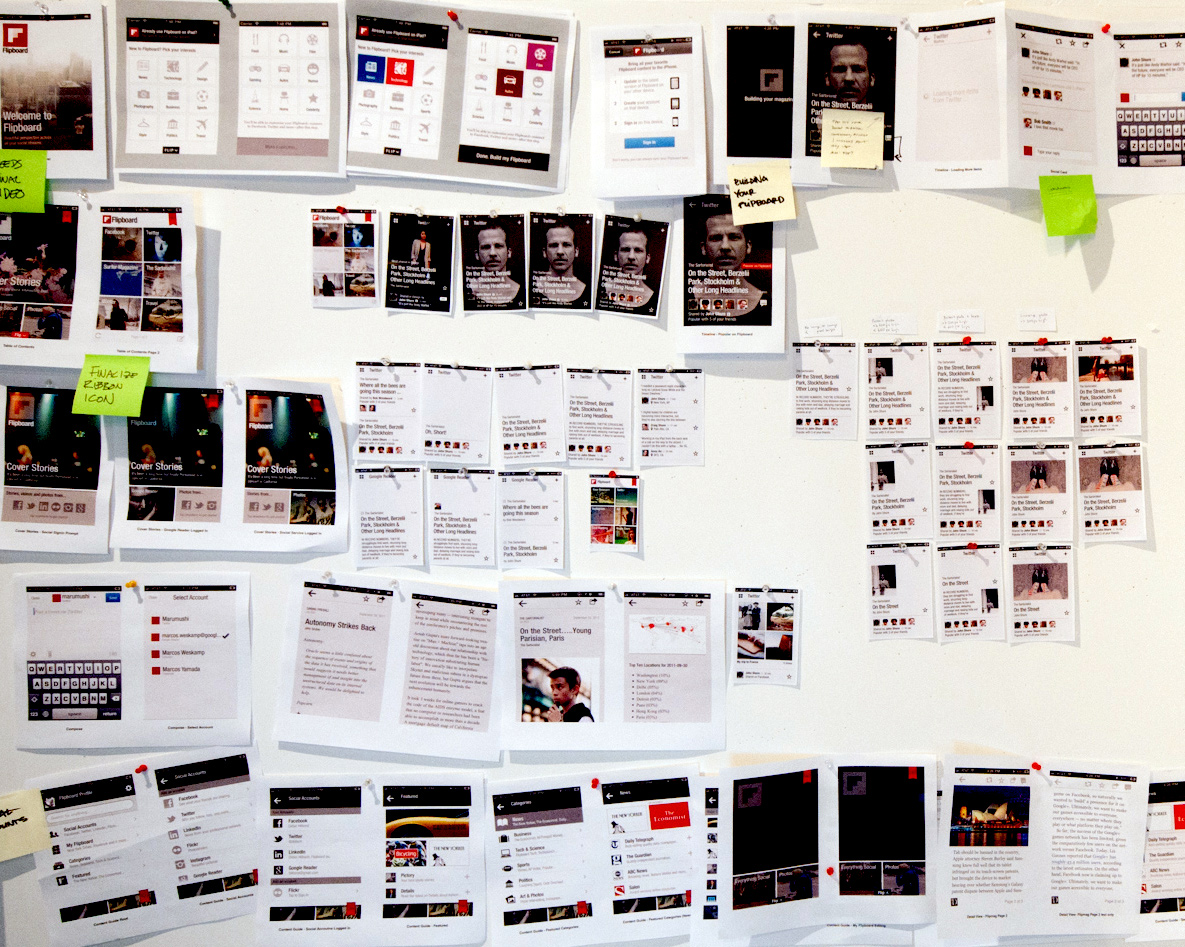
I'm currently working on a Prezi presentation on Marcos Weskamp. A designer of all sorts, Weskamp has been through the works in Japan. In the more recent past, he's made some phenomenal groundbreaking interfaces such as Newsmap and Flipboard. :) Go check out his story at:
http://www.marcosweskamp.com/
Subscribe to:
Posts (Atom)